
Nanaimo Neighbourhoods: Where to Live in Nanaimo BC
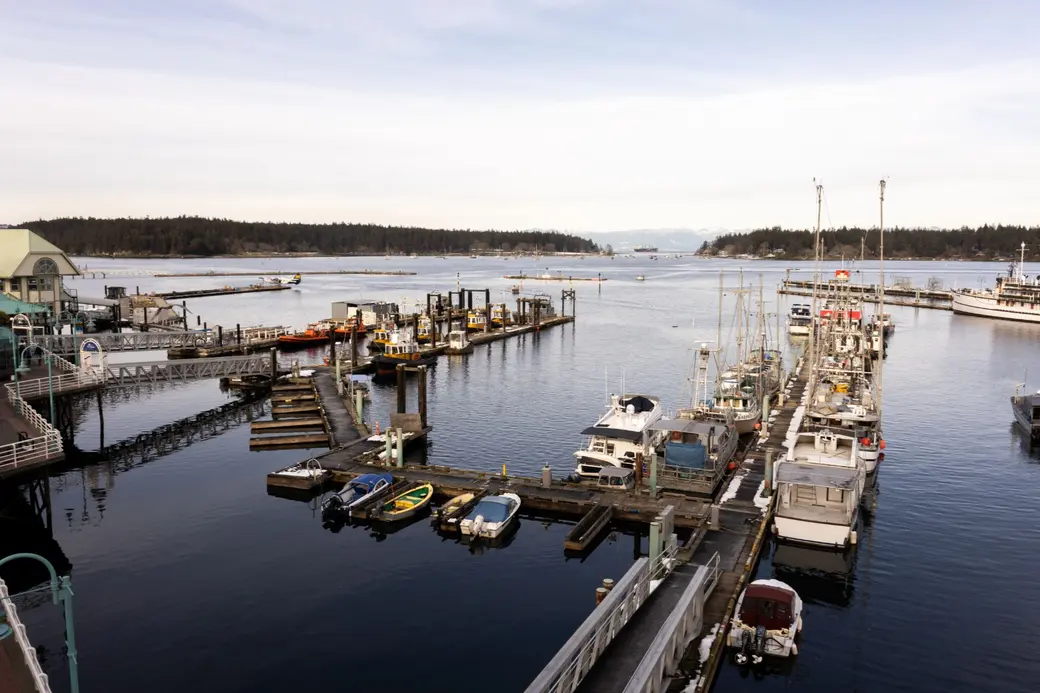
Nanaimo is not one place. It is a long, narrow city strung along the water, and the north end, the centre and the south end feel different day to day. Most people narrow it down by how they want to live first, then pick the neighbourhood second.
My name's Jessica Venables. I came here for university, planned to leave for Vancouver, and stayed. Before real estate I spent eight years as a CPA, so I am going to give you the numbers as well as the vibe.
Where should I live in Nanaimo?
Start with how you want your week to feel, not with a map.
If you want ocean views and newer homes, look at the north end. North Nanaimo and Hammond Bay sit high on the hillside, and elevation is what buys you the view here. Departure Bay gives you water access with a more established feel.
If you want to walk to things, the Old City and the downtown core are the only parts of Nanaimo where you can genuinely leave the car. Commercial Street, the Harbourfront Walkway and Maffeo Sutton Park are all on foot from there.
If you want space and quiet, head south and west. Cedar, the Jingle Pot areas and Extension have larger lots and a more rural feel while still being fifteen or twenty minutes from the middle of town.
If you want everything close and simple, central Nanaimo does that well. You are near the hospital, Country Club Centre, the Aquatic Centre and Beban Park, and you are not planning your day around traffic.
If budget is the priority, south Nanaimo and the Chase River area are usually where the search starts, along with parts of the Old City where the housing stock is older.
What is the difference between North and South Nanaimo?
North Nanaimo generally has newer construction, higher price points and more ocean views, and it is where the major shopping is concentrated around Woodgrove Centre and Costco. The streets are more structured and more recently built.
South Nanaimo is a mix. Older homes, newer infill, and more variety street to street. Entry prices are typically lower. It is also closest to the Duke Point ferry terminal if you are regularly heading to the Tsawwassen ferry.
Central Nanaimo sits between the two in almost every sense, including price.
Which Nanaimo neighbourhoods have ocean views?
North Nanaimo, Hammond Bay and Departure Bay have the most consistent ocean views, because of elevation more than anything else. Homes on the hillside look across the Strait of Georgia toward the mainland.
Worth knowing before you fall in love with a listing photo: "ocean view" covers everything from a full unobstructed water outlook to a slice between two roofs. Views also change as trees grow and as neighbouring lots are developed. The best way to see the view? Actually view the home in person.
Is Nanaimo walkable?
Mostly no. Nanaimo runs about 25 kilometres north to south along the highway corridor, and daily life for most people involves driving.
The exceptions are the Old City and downtown, where you can walk to shops like Iron Oxide, restaurants like Milton St. Public House, and the waterfront. The Harbourfront Walkway runs along the water and connects the downtown core to Maffeo Sutton Park.
Most drives across town land in the ten to twenty minute range, but where you live changes how often you are in the car.
How do you get from Nanaimo to Vancouver?
Three ways, and this is one of the real advantages of living here.
Hullo is the newest method and runs a foot passenger ferry from downtown Nanaimo to downtown Vancouver in roughly 70 minutes. If you are commuting to a Vancouver office occasionally rather than daily, this is the option people underestimate.
BC Ferries sails from Departure Bay to Horseshoe Bay, and from Duke Point to Tsawwassen. Which terminal is convenient depends heavily on which end of town you live in and where you're going.
Seaplanes and air. Harbour Air operates seaplane service from the harbour, and Seair operates seaplane service out of Departure Bay. Nanaimo Airport is south of the city near Cassidy.
Reservations, schedules and fares change. Check current times before you build your life around a sailing.
What does it actually cost to buy in Nanaimo?
This is the part most guides skip, and it is the part I care about most.
The purchase price is not the number that matters. Here is what else lands on your closing statement.
Property Transfer Tax
This is a tax that many people moving to BC don't consider, since many provinces don't charge it. BC charges 1% on the first $200,000, 2% from $200,000 to $2 million, and 3% from $2 million to $3 million, with a further charge on residential value above $3 million. On an $816,000 purchase that is roughly $14,300 before any exemption.
The first-time buyer exemption
For properties registered on or after 1 April 2024, first-time buyers pay no PTT under $500,000, receive an $8,000 reduction between $500,000 and $835,000, see it phased out between $835,000 and $860,000, and receive nothing at $860,000 or above.
Given where Nanaimo sits, that threshold matters here. The average single family detached home sold for around $816,400 in June 2026.
Everything else
Legal or notary fees, title insurance, a home inspection, appraisal if your lender wants one, and adjustments for property taxes already paid by the seller. Budget for these properly rather than discovering them the week of completion.
What do people get wrong about Nanaimo?
They treat it as one market. It is not, and pricing behaves differently at each end of the city and with each type of home.
They also assume it is a smaller, sleepier version of Victoria. It is its own thing, with a working harbour, a university, a regional hospital and a wide range of housing.
And a lot of people arrive certain they need to be in one specific area, then change their mind entirely once they have walked two or three neighbourhoods side by side. That is normal. What looks right on a map often does not feel right in person.
Places worth knowing
What to know before you buy here
Water and septic
Properties in Cedar, Extension and the more rural western edges may be on well and septic rather than city services. That changes your inspection list and your ongoing costs.
Slope and drainage
A lot of Nanaimo is built on a hillside. Elevation buys the view and can also bring retaining walls, drainage considerations and access questions in winter.
Older housing stock
Central Nanaimo and the Old City have genuinely lovely older homes. They also have the things older homes have: potential abandoned knob and tube, older electrical panels, aging or non-existent perimeter drains. None of that is a reason to walk away. It is a reason to inspect properly and budget honestly.
Strata bylaws
If you are looking at townhomes or condos, read the bylaws before you get attached, particularly around pets, rentals and age restrictions.
Ferry-dependent logistics
Living on the Island is wonderful. It also means that furniture delivery, specialist medical appointments and last-minute mainland trips all involve a sailing.
Working out where you fit
If you are down to two or three areas and cannot decide, that usually gets solved faster by walking them than by reading about them.
I grew up in Powell River, moved here for university and stayed, and I have renovated homes on this Island myself. I know what these neighbourhoods feel like at eight in the morning and at six at night, and I know what the financial side looks like underneath.
Reach out any time and we will figure out which part of Nanaimo actually fits.
Categories
Recent Posts



GET MORE INFORMATION

Personal Real Estate Corporation