
Moving from Vancouver to Nanaimo: The 2026 Guide for Lower Mainland Movers
In September 2026, the typical townhouse in Metro Vancouver cost $218,300 more than the typical detached house in Nanaimo.
That number is why most people start looking at this move.
It's a good place to start. It's not where I'd start the plan, though. The question that decides how this goes is a different one: in what order do you sell, buy and move?
I came to Nanaimo for university and planned to leave for Vancouver, but I stayed. I grew up in Powell River, so ferry schedules have shaped my plans for most of my life, and before real estate I spent eight years in accounting.
So this guide gives you the numbers, the commute, the paperwork and the order I'd do it in. Every figure is dated, and the sources are listed at the bottom.
Moving from Vancouver to Nanaimo: the short version
- Price: In September 2026, the Nanaimo single-family benchmark was $798,400. A Metro Vancouver detached home was $1,784,700, and a Fraser Valley detached home was $1,300,000.
- Size: About 113,000 people live in the City of Nanaimo, and about 130,000 in the greater Nanaimo area.
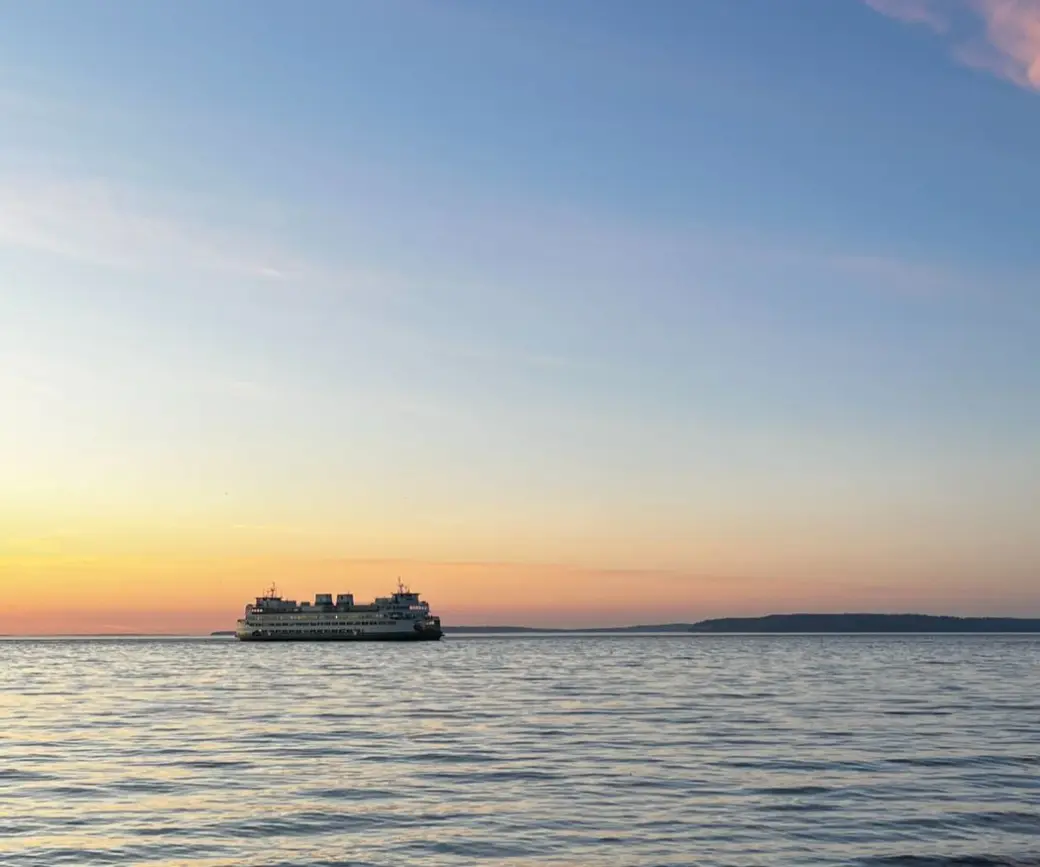
- Getting back to the city: BC Ferries takes about 1 hour 40 minutes from Departure Bay to Horseshoe Bay. The Hullo passenger ferry runs downtown to downtown in about 70 to 75 minutes. A Harbour Air floatplane takes about 20 minutes.
- Paperwork: You're staying in BC, so MSP and your driver's licence carry over. You update your address within 10 days.
- Plan these two early: the order you sell and buy in, and a family doctor.
- Where people land: North Nanaimo and Departure Bay for views and the ferry, downtown and the Old City for walking, Cedar and the south end for space.
Is Nanaimo cheaper than Vancouver?
For housing, yes, by a wide margin. A typical detached home in Nanaimo cost less than half of a typical detached home in Metro Vancouver in September 2026.
|
Market |
Home type |
Benchmark price, Sept 2026 |
Change from Sept 2025 |
|---|---|---|---|
|
Metro Vancouver |
Detached |
$1,784,700 |
Down 7.3% |
|
Metro Vancouver |
Townhouse |
$1,016,700 |
Down 4.7% |
|
Metro Vancouver |
Condo apartment |
$682,500 |
Down 6.2% |
|
Fraser Valley |
Detached |
$1,300,000 |
Down 8.8% |
|
Fraser Valley |
Townhouse |
$745,300 |
Down 6.2% |
|
Nanaimo |
Single-family |
$798,400 |
Down 2% |
|
Parksville-Qualicum |
Single-family |
$896,200 |
Down 3% |
|
VIREB area, board-wide |
Townhouse |
$557,000 |
Up 1% |
|
VIREB area, board-wide |
Condo apartment |
$401,700 |
Down 4% |
These are MLS® Home Price Index benchmarks from Greater Vancouver REALTORS®, the Fraser Valley Real Estate Board and the Vancouver Island Real Estate Board (VIREB). VIREB publishes townhouse and condo benchmarks for its whole board area, not for Nanaimo on its own.
Here's what the table means for a decision:
- Sell a typical Metro Vancouver detached home and buy a typical Nanaimo one, and the gap is about $986,300 before costs.
- Coming from the Fraser Valley, the same swap leaves about $501,600.
- A typical Metro Vancouver condo is within about $115,900 of a typical detached house in Nanaimo.
A benchmark is a typical home, not your home. Your Vancouver house and the Nanaimo house you want could each sit well above or below it. I use these numbers to decide whether the move is worth a closer look, then price the two real houses with recent comparable sales.
Nanaimo isn't one price, either. A waterfront home in Hammond Bay and a rancher in Chase River are different markets, and VIREB reports Nanaimo as one zone.
One more thing in that table. Metro Vancouver detached prices fell 7.3% over the year, and Nanaimo's fell 2%. The market you're selling in has softened more than the one you're buying in. The gap is still huge, but it's a little smaller than it was a year ago.
Both sides are slow right now. VIREB says its area moved into buyer's market territory in September, and the Fraser Valley board says its market has spent most of the last two years there. Metro Vancouver sales ran 25% below the 10-year average for September. Expect your sale to take some time, and plan the order around that.
What does it cost to move from Vancouver to Nanaimo?
The purchase price is one number on a long list. These are the ones Lower Mainland movers ask me about most.
Property Transfer Tax on your Nanaimo purchase
BC charges Property Transfer Tax when you buy: 1% on the first $200,000, 2% from $200,000 to $2 million, 3% above $2 million, and a further 2% on residential value above $3 million.
On a home at the Nanaimo benchmark of $798,400, that's about $13,968.
If you've owned your own home before, the first-time buyer exemption won't apply. Most people making this move have, so budget for the full amount.
Selling costs on the mainland side
Your Vancouver sale has its own costs: commission, legal fees, and any prep before you list. Ask your agent there for a net sheet, so you know what you'll walk away with, not just the sale price. If you need a referral to a great agent, just ask us.
If your Vancouver home ever had a rental suite, or wasn't always your principal residence, talk to your accountant before you list. That's their call, not mine.
Owning two homes at once
If the dates don't line up, you may carry both houses for a stretch. That can mean bridge financing, two sets of utilities and two property tax bills. Your mortgage broker or lender is the person to map the financing.
Speculation and vacancy tax
The City of Nanaimo, Lantzville, Parksville and Qualicum Beach are on the Province's list of speculation and vacancy tax areas, along with the City of Vancouver and most of Metro Vancouver.
Owners in those areas file a declaration every year. Most people living in the home as their principal residence don't pay the tax, but they still have to declare.
If you'll own two homes for a while, or the Nanaimo house will sit empty while you wrap things up on the mainland, ask your accountant how that year gets treated.
The moving truck
Moving trucks ride the ferry too. While BC Ferries upgrades the Horseshoe Bay terminal, every vehicle sailing from Horseshoe Bay to Departure Bay has to be booked and paid in advance, commercial vehicles included.
BC Ferries points commercial and oversized vehicles to the Tsawwassen to Duke Point route for its highway access. Ask your mover which route they're booking before you pick a completion date.
Property tax and services
Look at the actual property tax bill on any home you're serious about, rather than guessing from the price.
Outside city limits, check what services cost too. In parts of Nanoose Bay, water and sewer are flat annual charges.
How do you get from Nanaimo to Vancouver?
Five ways, and the right one depends on where you live in Nanaimo and where you're going in Vancouver.
|
Option |
Nanaimo end |
Vancouver end |
Time |
Best for |
|---|---|---|---|---|
|
BC Ferries |
Departure Bay, central Nanaimo |
Horseshoe Bay, West Vancouver |
About 1 hr 40 min |
Driving to the North Shore or downtown |
|
BC Ferries |
Duke Point, south Nanaimo |
Tsawwassen, Delta |
About 2 hr |
Driving to Richmond, Surrey or the Fraser Valley |
|
Hullo passenger ferry |
Port of Nanaimo, just south of downtown |
Coal Harbour, downtown Vancouver |
About 70 to 75 min |
Walk-on day trips and office days |
|
Harbour Air floatplane |
Nanaimo harbour |
Vancouver Harbour downtown, or YVR |
About 20 min |
When time matters more than cost |
|
Flights |
Nanaimo Airport, south of the city near Cassidy |
Vancouver International |
About 35 min |
Connecting flights |
A few things that change how this feels day to day:
- From Horseshoe Bay, there's no drive-up right now. Every vehicle heading to Departure Bay has to be booked and paid in advance during the terminal upgrade. The trip from Departure Bay back to Horseshoe Bay doesn't need a booking, though BC Ferries recommends one.
- There's a direct sailing from Tsawwassen to Departure Bay. On select dates through March 31, 2027, it leaves Tsawwassen at 4:30 pm and arrives at 6:30 pm. It only runs in that direction.
- Duke Point has no public transit. Departure Bay has frequent buses to downtown and North Nanaimo, so it's the better terminal if you're walking on.
A standard one-way fare between Horseshoe Bay and Departure Bay is $89 for a car up to 20 feet, plus $21 per adult. Saver fares on select sailings start at $49 for a car and driver. Seniors travel free as passengers Monday to Thursday, holidays excluded.
Hullo raised its fares for the first time in June 2026 and added a limited number of $19.99 seats on select sailings. Fares change, so check before you plan around one.
Can you live in Nanaimo and work in Vancouver?
Occasionally, yes. Every day, it's a lot.
Hullo makes an office day realistic: downtown Nanaimo to Coal Harbour in about 70 to 75 minutes, then walk to your meeting. If you'll go in once or twice a week, live within an easy drive of the Hullo terminal or Departure Bay, and the commute becomes a plan instead of a gamble.
If the job needs you in Vancouver five days a week, I'd want to talk that through before we look at a single house.
What changes when you move from Vancouver to Nanaimo?
Less than you'd think, because you're staying in BC.
- Your MSP coverage stays. There's no new enrolment. The law asks you to update your address with Health Insurance BC within 10 days of moving.
- Your driver's licence stays. ICBC asks you to change the address on your licence within 10 days, and to update your insurance policy too. You can update ICBC and Health Insurance BC together through the B.C. government's online address change service.
- Your family doctor probably doesn't. If you're leaving your doctor behind, register with the Health Connect Registry as soon as you have a Nanaimo address. You can do it online or by calling 8-1-1, and you'll need your Personal Health Number.
- The hospital is regional. Nanaimo Regional General Hospital is the designated tertiary hospital for the central and north Island, serving roughly 460,000 people north of the Malahat. A high acuity unit opened in August 2025, a cancer centre is under construction with completion expected in 2028, and Island Health started concept planning for a larger expansion in February 2026. Some specialist care still means a trip to Victoria or the mainland.
Where do Vancouver movers land in Nanaimo?
It depends on what you're leaving behind. Here's how I'd match it.
- Leaving a downtown or Kitsilano condo, and you want to walk? Downtown and the Old City are the only parts of Nanaimo where you can leave the car at home. Commercial Street, the Harbourfront Walkway and the Hullo terminal are all close.
- Leaving the North Shore, and you want a view? North Nanaimo, Hammond Bay and Departure Bay sit up the hillside, and elevation is what buys the view here. Departure Bay is also minutes from the Horseshoe Bay ferry.
- Leaving Surrey, Langley or the Tri-Cities for more space? Cedar, the Jingle Pot area and Extension have bigger lots and a rural feel, 15 to 20 minutes from the middle of town. South Nanaimo is also closest to Duke Point and the Tsawwassen ferry.
- Want a lake? Uplands has Long Lake in the middle of the city.
- Want a village feel close to the city? Lantzville sits just north of Nanaimo with its own council.
- Want the beach town pace? Parksville and Qualicum Beach are about 30 to 45 minutes north, with Nanoose Bay in between.
For the full street-level picture, read my guide to Nanaimo neighbourhoods.
The order I'd do it in
People ask me about timing. For this move, order matters more. Here's the sequence I walk through with people coming from the mainland.
- Get a real number on your Vancouver home. Not a hopeful one. Everything after this depends on it.
- Talk to your mortgage broker or lender. Ask how a sale and a purchase overlap, and whether bridge financing is an option. Financing structure is their call, not mine.
- Decide the order before you shop. Sell first and you know your budget, but you may need somewhere to stay. Buy first and you get the house, but you may carry two. A subject to sale offer sits in between, and it only works when the seller can see a real plan behind it. Here's how we sequenced one over Christmas.
- Narrow it to two or three areas. Then walk them. What looks right on a map often feels different in person.
- Scout in one trip. Take the ferry over for the day. If you can't come over, I'll walk you through a home on video.
- Book the ferry and the movers early. Especially if your truck is coming through Horseshoe Bay.
- Do the admin in the first 10 days. MSP, ICBC and the Health Connect Registry. Then your speculation and vacancy tax declaration when the letter arrives early in the new year.
Done in that order, you move once, you know your numbers before you fall for a house, and nothing important waits on a ferry.
What surprises people moving from the mainland
- Life bends to the ferry. A furniture delivery, a specialist appointment or a last-minute trip to the city all involve a sailing. It becomes part of planning, not a crisis.
- Nanaimo is long, and mostly car-dependent. The city runs about 25 kilometres north to south. Downtown and the Old City are the walkable exceptions.
- "Ocean view" covers a lot. It can mean a full outlook or a slice between two roofs. See it in person.
- Rural lots come with their own systems. Well and septic are common in Cedar, Extension and the rural edges. That changes your inspection list and your running costs.
- Older homes need a proper inspection. Older wiring and panels, aging perimeter drains. None of that is a reason to walk away. I've renovated three houses of my own, including moving a carriage house, so I can usually tell you which fixes are weekend money and which ones mean moving walls.
- The pace. It's slower here. That's usually the point.
Frequently asked questions about moving from Vancouver to Nanaimo
Is it cheaper to live in Nanaimo than Vancouver?
For housing, yes, by a wide margin. In September 2026 the Nanaimo single-family benchmark was $798,400, compared with $1,784,700 for a detached home in Metro Vancouver, according to VIREB and Greater Vancouver REALTORS®. Budget from the actual property tax bill, utilities and ferry trips for the home you're considering.
How long is the ferry from Vancouver to Nanaimo?
BC Ferries takes about 1 hour 40 minutes from Horseshoe Bay to Departure Bay and about 2 hours from Tsawwassen to Duke Point. The Hullo passenger ferry runs from downtown Vancouver to Nanaimo in about 70 to 75 minutes, and a Harbour Air floatplane takes about 20 minutes.
Can you live in Nanaimo and work in Vancouver?
Yes, if you go in occasionally. The Hullo passenger ferry runs downtown to downtown in about 70 to 75 minutes, which makes an office day or two a week realistic. A five-day commute is a lot to sustain, so it works best with a hybrid or remote job.
Do I need a new MSP card or driver's licence when I move from Vancouver to Nanaimo?
No. You're staying in BC, so your coverage and licence carry over. You do need to update your address with Health Insurance BC and ICBC within 10 days, and you can do both through the B.C. government's online address change service.
Should I sell my Vancouver home before buying in Nanaimo?
It depends on your equity, your financing and how much certainty you need. Selling first fixes your budget, buying first secures the house, and a subject to sale offer sits between the two. Decide the order with your mortgage broker before you write an offer.
Is Nanaimo part of BC's speculation and vacancy tax?
Yes. The City of Nanaimo, Lantzville, Parksville and Qualicum Beach are all on the Province's list of taxable areas, and owners there file a declaration every year. Most people living in the home as their principal residence don't pay the tax, but they still need to declare.
How much is property transfer tax on a Nanaimo home?
BC's Property Transfer Tax is 1% on the first $200,000 and 2% from $200,000 to $2 million, with higher rates above that. On a home at the September 2026 Nanaimo benchmark of $798,400, that works out to about $13,968. Your lawyer or notary will confirm the exact amount on your closing statement.
What is the best area of Nanaimo for people moving from Vancouver?
It depends on how you want your week to look. North Nanaimo, Hammond Bay and Departure Bay offer views and quick access to the Horseshoe Bay ferry, downtown and the Old City are the walkable areas, and Cedar and the south end have bigger lots. Parksville and Qualicum Beach, 30 to 45 minutes north, suit a beach town pace.
Thinking about the move?
How much house your money buys is the question that starts this.
The order you do it in is what makes the number real.
If you're weighing a move from Vancouver to Nanaimo, reach out to us so we can set up a plan together.
Jessica Venables & Chase Salisbury
Annex Real Estate Group
Last updated October 22, 2026. Market figures are September 2026 benchmarks, the latest released at the time of writing.
Sources
- Greater Vancouver REALTORS®, September 2026 market report
- Fraser Valley Real Estate Board, September 2026 statistics package
- VIREB September 2026 figures, reported by PQB News
- Canadian Press: Vancouver-area home sales in September 2026
- City of Nanaimo, 2026 State of the Economy report
- NanaimoNewsNOW: Statistics Canada estimate for Greater Nanaimo, July 2025
- Province of BC, property transfer tax rates
- BC Ferries, Horseshoe Bay terminal travel changes
- BC Ferries, direct sailing from Tsawwassen to Departure Bay
- BC Ferries fare guide, effective April 8, 2026
- Daily Hive: Hullo Ferries third anniversary
- Province of BC, speculation and vacancy tax taxable areas
- Province of BC, moving within BC and your MSP account
- ICBC, change your name or address
- HealthLink BC, Health Connect Registry
- Regional District of Nanaimo, Electoral Area E 2026 property tax brochure
- Gabriola Sounder: NRGH serves about 460,000 residents north of the Malahat
- Gabriola Sounder: NRHD 2026 budget, high acuity unit and Nanaimo Cancer Centre
- NanaimoNewsNOW: Island Health begins NRGH expansion concept plan
Categories
Recent Posts


GET MORE INFORMATION

Personal Real Estate Corporation